
Back to Insights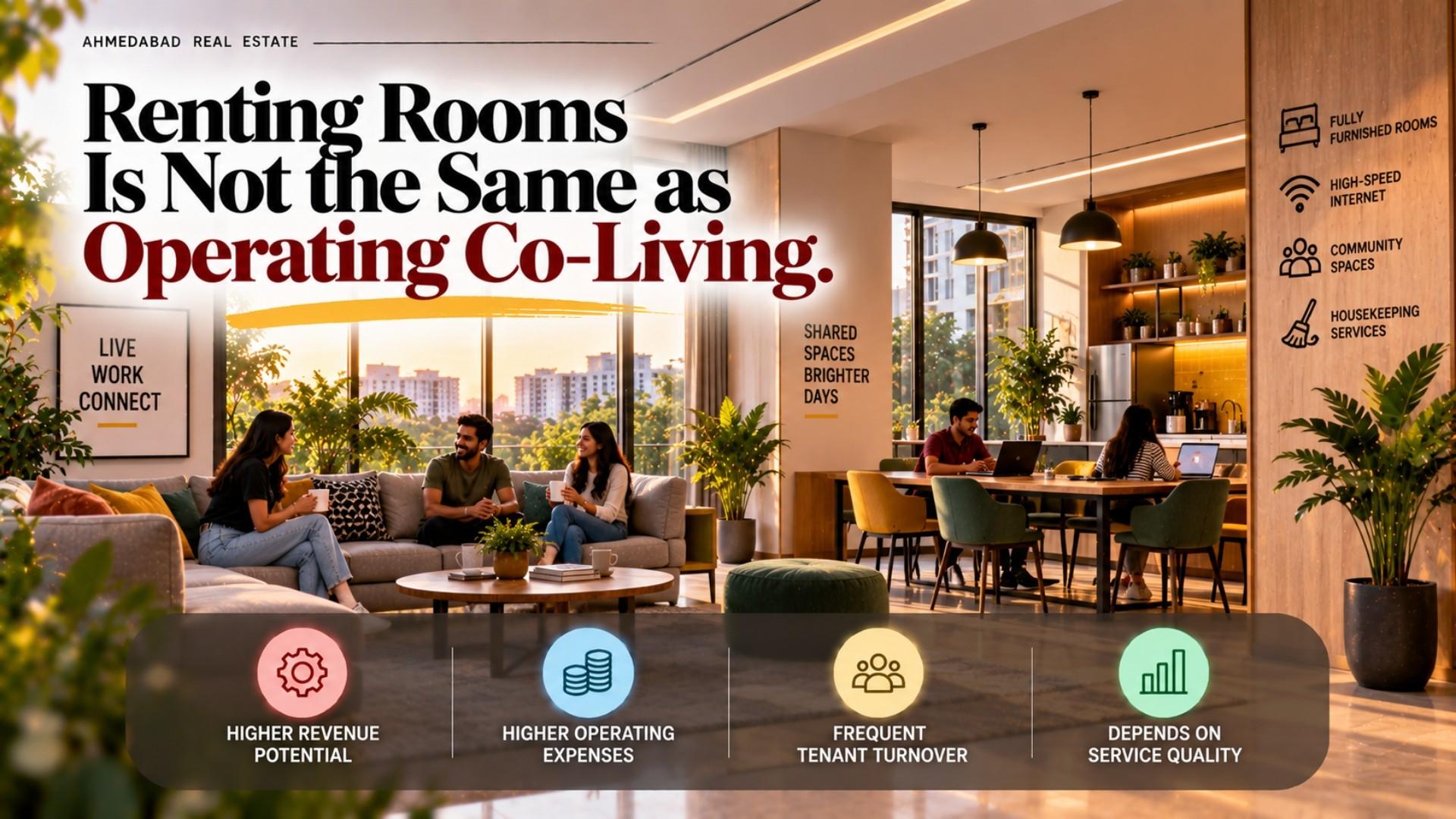
Why Co-Living Requires a Different Real Estate Business Model
October 21, 2026|Written by: Anshika Bundela
Renting Rooms Is Not the Same as Operating Co-Living
Co-living properties combine accommodation with shared facilities and, in some cases, services such as housekeeping, internet access and community spaces.
Their appeal may come from convenience and flexibility, particularly for people who do not want the responsibilities of managing a conventional household.
However, these properties operate differently from ordinary residential rentals.
Revenue Depends on Operations
A co-living operator must coordinate occupancy, cleaning, maintenance, tenant turnover, utilities and shared-space management.
Higher revenue per square foot may be possible when several residents share a property, but that revenue can come with higher operating expenses and more frequent tenant changes.
The business therefore depends on service quality and operating efficiency, not just the underlying property.
Test the Operating Economics
Investors should distinguish gross rental collections from income after operating expenses, vacancies, furnishing costs and management fees.
They should also examine whether demand comes from a sufficiently broad tenant base or relies heavily on one employer, college or seasonal population.
In Conclusion :
Co-living is an operating business built around real estate; evaluating it using conventional residential rental assumptions can produce misleading results.