
Insights
Thoughtful perspectives for those who learn, lead, and build responsibly.
Loading insights…
Thoughtful perspectives for those who learn, lead, and build responsibly.
Loading insights…
Insights & Updates

22 Oct 2026
Higher Land Acquisition Costs Could Change How Buyers Judge New Residential Prices As land values rise across Ahmedabad’s SP Ring Road corridor, developers acquiring sites at higher prices may introduce new residential projects at elevated base rates. For buyers around Vaishnodevi Circle in 2027, this could create a sharper comparison between newly launched apartments and ready or near-ready homes developed on land acquired during earlier market cycles. Land is a major component of residential development economics, alongside construction, approvals, financing, marketing, and other project expenses. Higher acquisition costs can place upward pressure on a developer’s pricing expectations, particularly when the project is positioned in a premium location or offers substantial amenities. However, a higher land cost does not automatically justify a higher selling price. Buyers ultimately assess what they receive for the money: usable carpet area, construction quality, location, possession certainty, maintenance costs, and the availability of comparable alternatives. This creates a potential advantage for selected ready-to-move properties. If their owners or developers can offer competitive pricing despite earlier land acquisition costs, these homes may appear more attractive to buyers who prioritise immediate occupancy and reduced execution risk. Conversely, a new launch may still command a premium when it offers meaningful design improvements, better amenities, or a demonstrably stronger location. The comparison should be based on total acquisition cost rather than headline rates alone, including taxes, registration, parking, and other applicable charges. Rising land costs may influence new-launch pricing around Vaishnodevi Circle, but buyer acceptance will depend on perceived value. Ready inventory with competitive all-in pricing could become a stronger alternative when the premium for a new project is difficult to justify.

22 Oct 2026
Family-Sized Homes Could Remain a Core Demand Driver in Vaishnodevi Circle Buyer preference for larger homes is an important factor shaping Ahmedabad’s residential market. Survey findings cited in recent market commentary suggest that approximately 57% of homebuyers in the city prefer 3 BHK homes, indicating a strong inclination towards additional space. If this preference persists, it could support demand for well-planned family apartments around Vaishnodevi Circle through 2027. The micro-market already offers a range of 3 BHK configurations across mid-market and premium residential projects. For end-users, these homes can provide separate spaces for children, work-from-home requirements, guests, and changing family needs. This functional flexibility can make a 3 BHK more attractive than a smaller configuration for buyers planning to stay for several years. However, preference does not automatically translate into faster sales for every project. Total purchase price, usable carpet area, floor-plan efficiency, maintenance charges, construction quality, and possession timelines all influence the final decision. Developers that offer practical layouts and a competitive price per unit of usable space may be better positioned than projects that rely primarily on larger headline dimensions. Buyers are also likely to compare established, ready-to-move homes with newly launched inventory. For investors, the depth of end-user demand matters because it can support resale liquidity and reduce dependence on short-term speculative activity. Actual absorption should still be assessed using project-level sales and inventory data. Strong 3 BHK preference could underpin demand in Vaishnodevi Circle, but projects with efficient layouts, credible delivery, and pricing aligned with household budgets are better positioned to convert that preference into actual sales.
22 Oct 2026
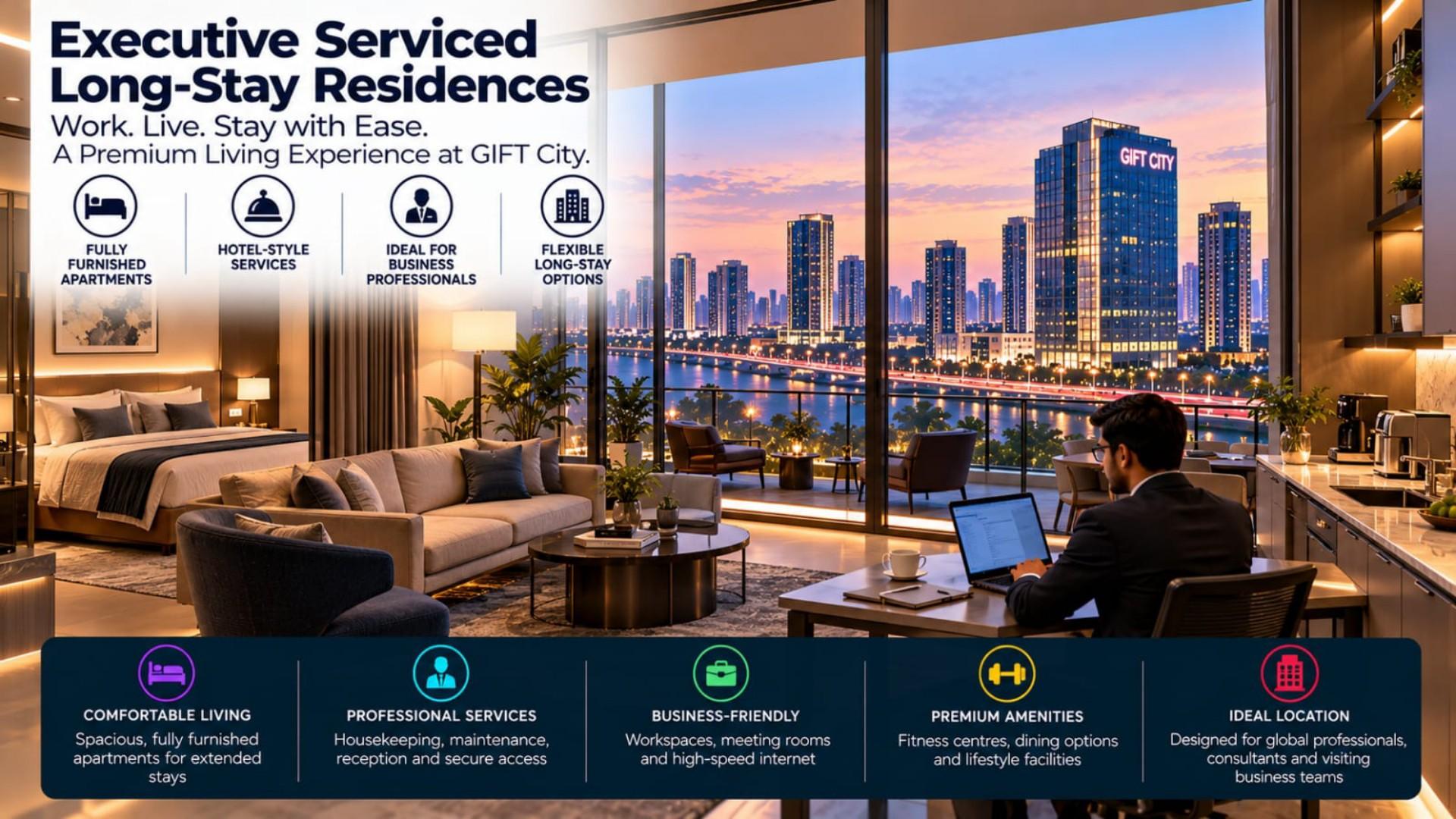
As GIFT City expands its international financial services ecosystem, demand for flexible, professionally managed accommodation could grow alongside its workforce of financial professionals, consultants and international business visitors. Executive serviced long-stay residences represent a specialised residential concept designed for people who need comfortable, fully furnished accommodation for several weeks or months rather than a conventional hotel stay or permanent home. These residences typically combine private apartments with hotel-style services such as housekeeping, maintenance, reception, secure access and optional food services. Depending on the development, facilities may include workspaces, meeting rooms, fitness centres, laundry services and high-speed internet. The objective is to provide a residential environment that supports both daily living and professional commitments. For GIFT City, potential customers could include expatriate executives, visiting fund managers, international consultants, project teams and professionals relocating temporarily for business assignments. Companies may also prefer serviced residences for employees on fixed-term contracts because they can simplify accommodation arrangements and reduce the administrative burden of managing individual rentals. From a real estate perspective, this model could create opportunities for developers, hospitality operators and property managers to work together. However, demand would depend on actual corporate occupancy, rental budgets, length of stay and competition from hotels and conventional furnished apartments. Developers would also need to evaluate operating costs, service quality, applicable property-use rules and the balance between accommodation revenue and ongoing management expenses. Serviced long-stay residences could fill the gap between hotels and traditional rentals in GIFT City's evolving property market. Their long-term potential will depend on sustained demand from corporate occupiers, consistent service standards and a pricing model that makes extended stays attractive for both businesses and residents.
22 Oct 2026
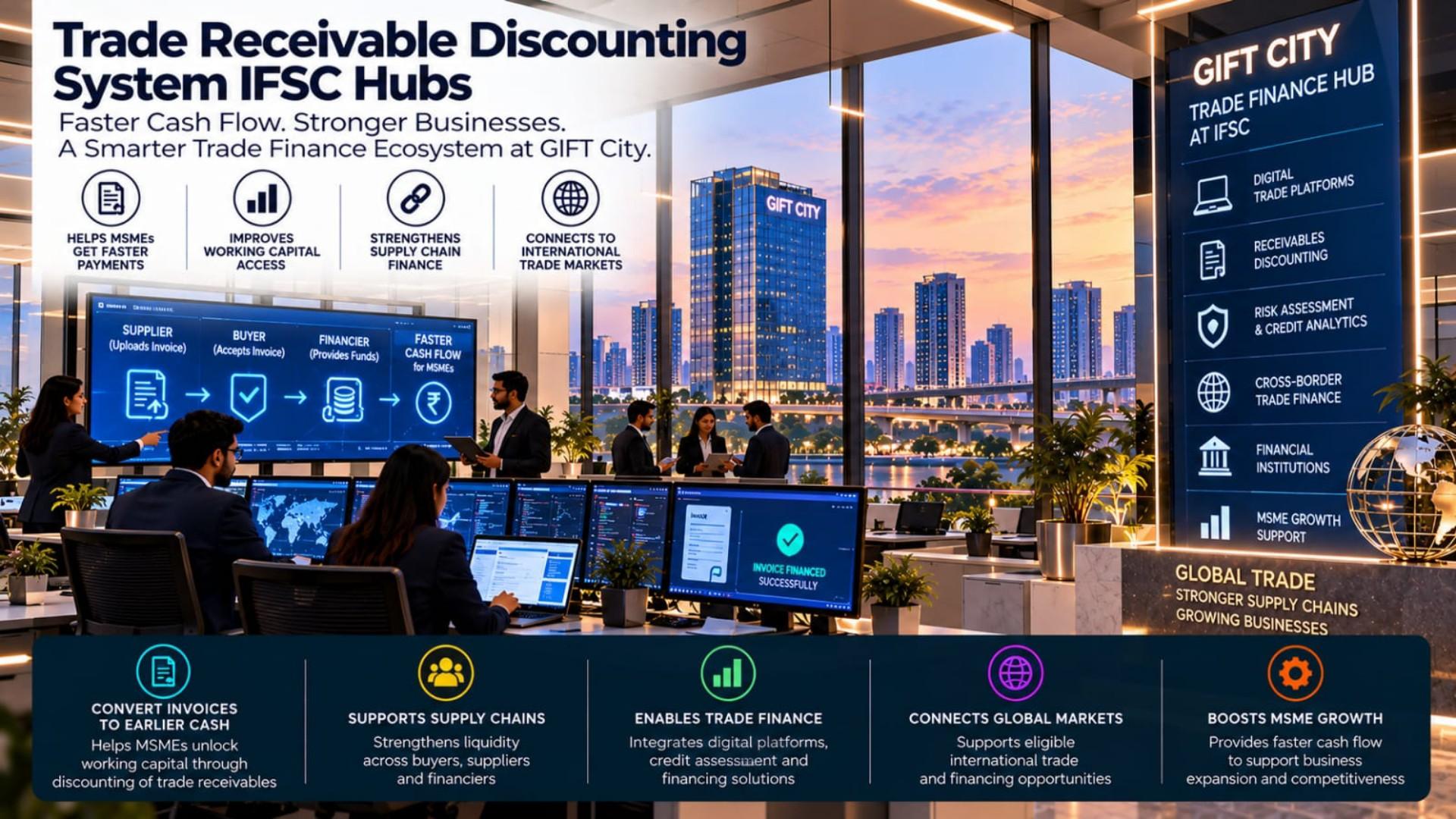
As GIFT City expands its international financial services ecosystem, digital trade finance could create new opportunities to improve access to working capital for businesses involved in domestic and international supply chains. Trade Receivable Discounting System (TReDS) hubs represent a specialised financial technology concept focused on helping micro, small and medium enterprises (MSMEs) convert unpaid invoices into faster cash flow. MSMEs often supply goods or services to larger companies but may need to wait weeks or months for payment. Through a TReDS platform, eligible suppliers can upload trade receivables, which are accepted by the relevant buyers and financed by participating financiers through a competitive bidding process. The supplier receives funds earlier, generally at a discount, while the financier collects payment when the invoice becomes due. An IFSC-focused trade finance hub could support digital platforms, financial institutions, invoice verification services, risk assessment teams and cross-border trade finance specialists. Integration with digital documentation and supply-chain data could help improve transparency, reduce manual processing and make financing decisions more efficient. For GIFT City, this concept could complement its broader financial services ecosystem by connecting eligible financiers with businesses participating in international trade. However, TReDS operations are subject to the applicable regulatory framework, and a conventional domestic TReDS platform is not automatically authorised to operate as an IFSC platform. Any proposed model would need to satisfy the relevant licensing, eligibility and transaction requirements. Its commercial success would depend on supplier participation, buyer acceptance, financier interest and reliable digital infrastructure. Digital receivables financing could help strengthen working-capital access across supply chains. For GIFT City, the opportunity lies in connecting eligible financial institutions, technology platforms and trade participants through compliant, transparent financing structures that turn verified invoices into more efficient cash-flow management.
22 Oct 2026
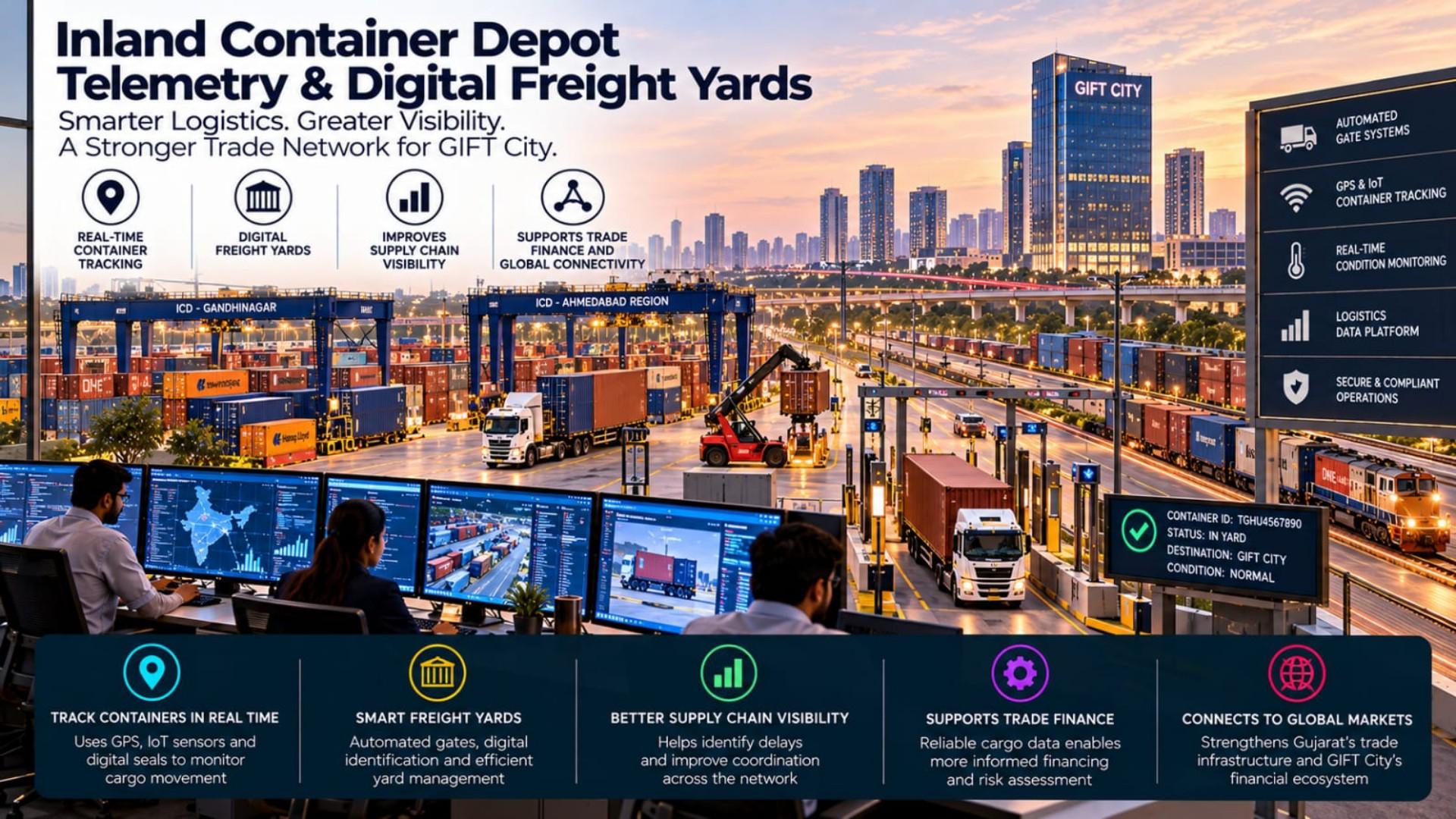
As GIFT City strengthens its international financial and business ecosystem, digital logistics infrastructure could create new opportunities for connecting financial services with India's wider trade network. Inland Container Depot (ICD) telemetry and digital freight yards represent a specialised concept focused on tracking cargo movements, monitoring container conditions and improving the visibility of inland freight operations. An Inland Container Depot is an inland facility where shipping containers can be handled, stored and processed for eligible customs and logistics activities. By integrating digital sensors, GPS tracking, electronic seals and logistics management platforms, operators can monitor container locations, movement status and selected environmental conditions. This information can help logistics teams identify delays, coordinate transportation and maintain more accurate shipment records. Digital freight yards could also use automated gate systems, container identification technologies and real-time dashboards to manage vehicle entry, storage allocation and cargo handling. For temperature-sensitive or high-value goods, suitable sensors could provide alerts when monitored conditions move outside specified limits. Reliable data exchange between logistics operators, transport providers and customs systems could further improve coordination across the supply chain. For GIFT City, the opportunity would primarily involve digital freight technology, trade finance integration, supply-chain analytics and partnerships with logistics operators. Physical container handling would generally require appropriately located freight facilities with the necessary land, transport connections and regulatory permissions. A digital platform operating from GIFT City would not, by itself, replace the need for a physical ICD or establish customs clearance authority. Digital freight visibility could strengthen connections between Gujarat's trade infrastructure and GIFT City's financial services ecosystem. The greatest value would come from reliable cargo data, better coordination and integration with trade finance—not simply adding sensors to existing logistics operations.
21 Oct 2026
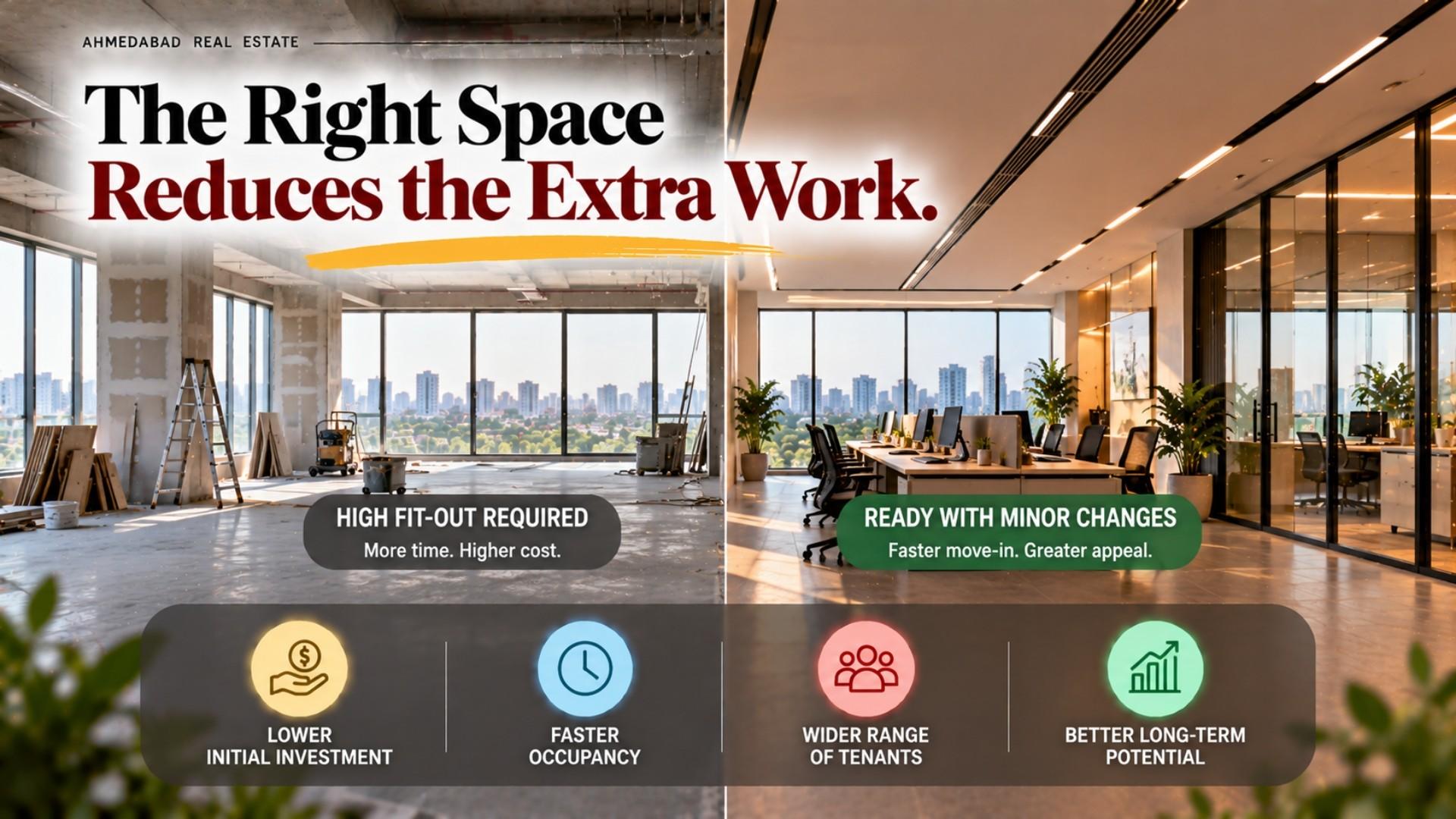
A Vacant Office Is Not Always Ready for Business A commercial unit may be structurally complete but still require substantial work before a tenant can occupy it. Partitions, lighting, flooring, electrical installations, meeting rooms and specialised equipment can all add to the cost of preparing a space. For a tenant comparing two offices, the advertised rent is only one part of the decision. Consider two offices with similar rents. One requires extensive modifications, while the other can accommodate the tenant's operations with relatively minor changes. The second office may become more attractive even if its headline rent is slightly higher. For landlords, the condition of the delivered space can therefore influence the time required to secure a tenant and the type of businesses willing to consider the property. Assess the Space in Its Delivered Condition Investors should understand what the landlord provides, which improvements the tenant must fund, and whether specialised installations can be reused by future occupants. Tenants should compare the combined cost of rent, fit-out and any expected reinstatement work at the end of the tenancy. In The Final Nutshell : The commercial usefulness of a property depends partly on how much additional investment is required before a business can operate from it.
21 Oct 2026
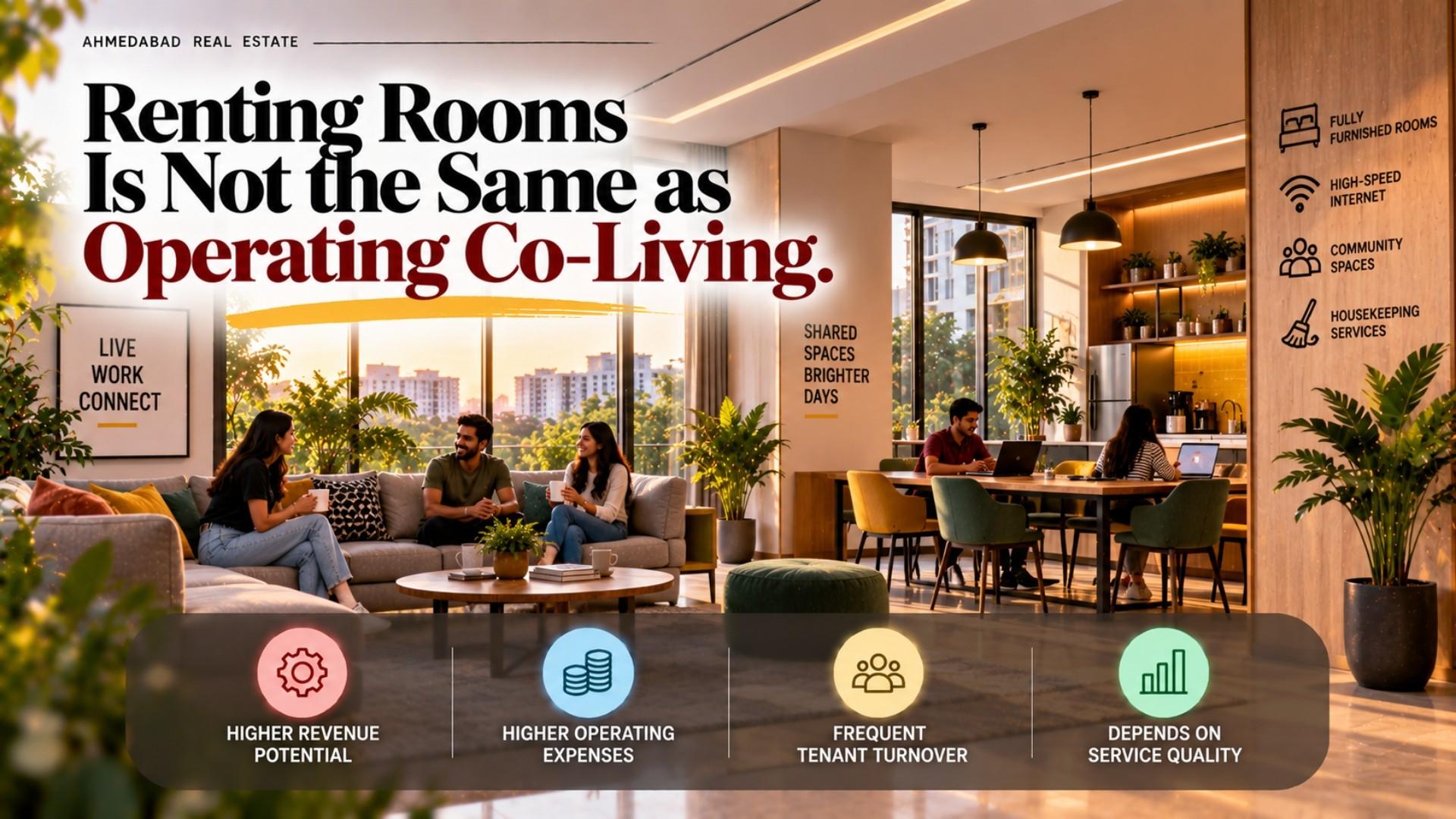
Renting Rooms Is Not the Same as Operating Co-Living Co-living properties combine accommodation with shared facilities and, in some cases, services such as housekeeping, internet access and community spaces. Their appeal may come from convenience and flexibility, particularly for people who do not want the responsibilities of managing a conventional household. However, these properties operate differently from ordinary residential rentals. Revenue Depends on Operations A co-living operator must coordinate occupancy, cleaning, maintenance, tenant turnover, utilities and shared-space management. Higher revenue per square foot may be possible when several residents share a property, but that revenue can come with higher operating expenses and more frequent tenant changes. The business therefore depends on service quality and operating efficiency, not just the underlying property. Test the Operating Economics Investors should distinguish gross rental collections from income after operating expenses, vacancies, furnishing costs and management fees. They should also examine whether demand comes from a sufficiently broad tenant base or relies heavily on one employer, college or seasonal population. In Conclusion : Co-living is an operating business built around real estate; evaluating it using conventional residential rental assumptions can produce misleading results.
21 Oct 2026
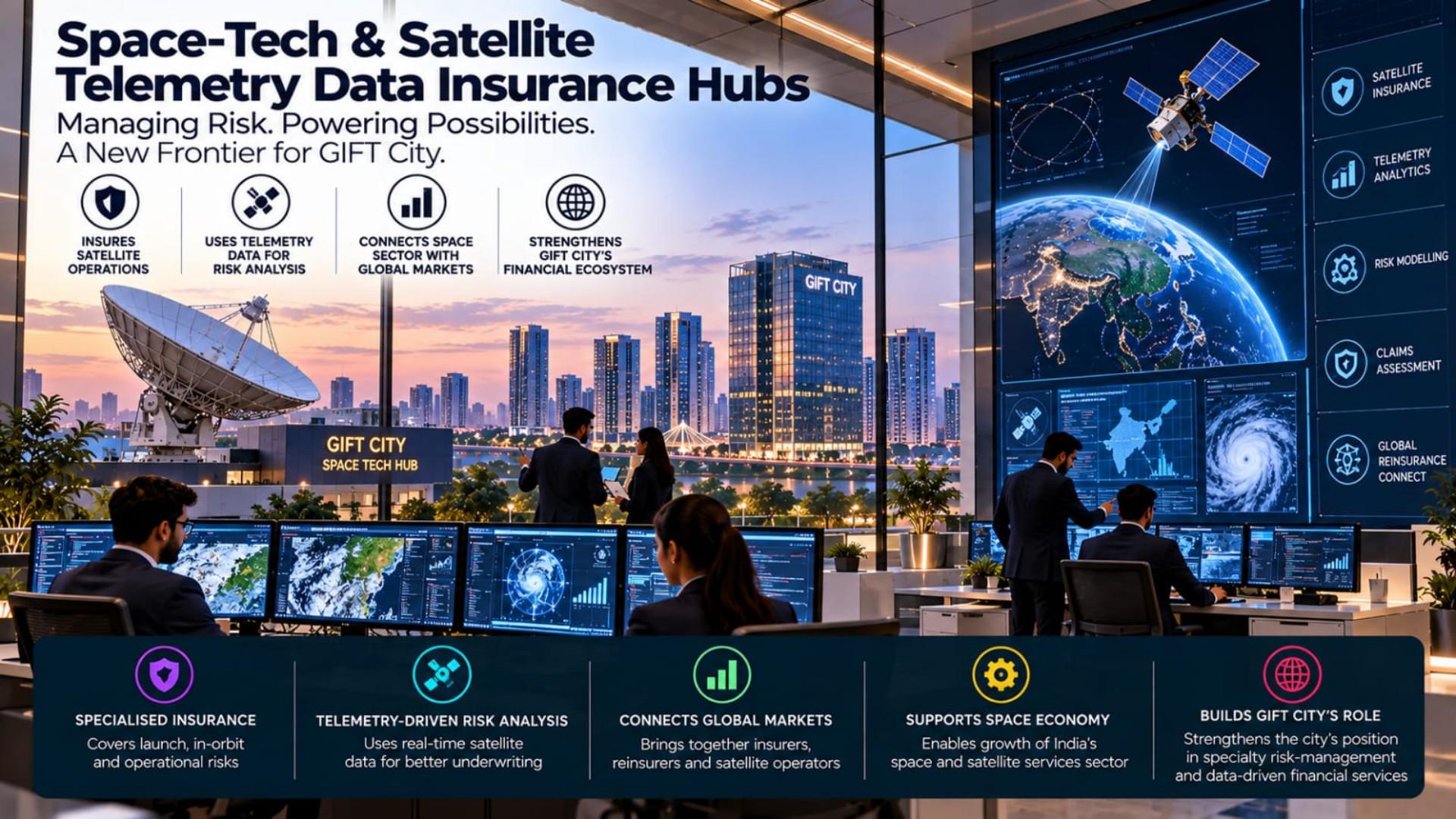
As GIFT City expands its international financial services ecosystem, space technology could create new opportunities for specialised insurance, risk assessment and data-related financial services. Space-tech and satellite telemetry data insurance hubs represent an emerging concept focused on managing the risks associated with satellite operations, space-based communications and the growing commercial use of orbital data. Satellites support services such as telecommunications, navigation, weather forecasting, Earth observation and disaster monitoring. Their operation involves risks including launch failure, equipment malfunction, signal disruption, cyberattacks and unexpected interruptions to service. Satellite telemetry—the technical information transmitted by spacecraft about their status, performance and operating conditions—can help engineers monitor these risks and assess equipment health. A specialised hub could bring together space insurers, reinsurers, risk analysts, satellite operators and data technology companies. Potential services may include satellite launch and in-orbit insurance, technical risk modelling, claims assessment, satellite performance analytics and insurance products linked to service interruptions. Secure data platforms could help insurers evaluate technical evidence and make more informed underwriting decisions. For GIFT City, this concept could offer a niche opportunity to connect India's growing space sector with international insurance and reinsurance markets. Gujarat's wider technology and industrial ecosystem may provide supporting capabilities, while GIFT City's financial services framework could be relevant for eligible insurance activities. However, specialised expertise, reliable technical data, suitable regulatory approvals and partnerships with satellite operators would be essential for commercial development. Space-related insurance could diversify GIFT City's specialty risk-management ecosystem. The opportunity lies in connecting satellite engineering data with sophisticated underwriting and risk analysis, while building the technical expertise and institutional partnerships needed to serve a complex global market.
21 Oct 2026
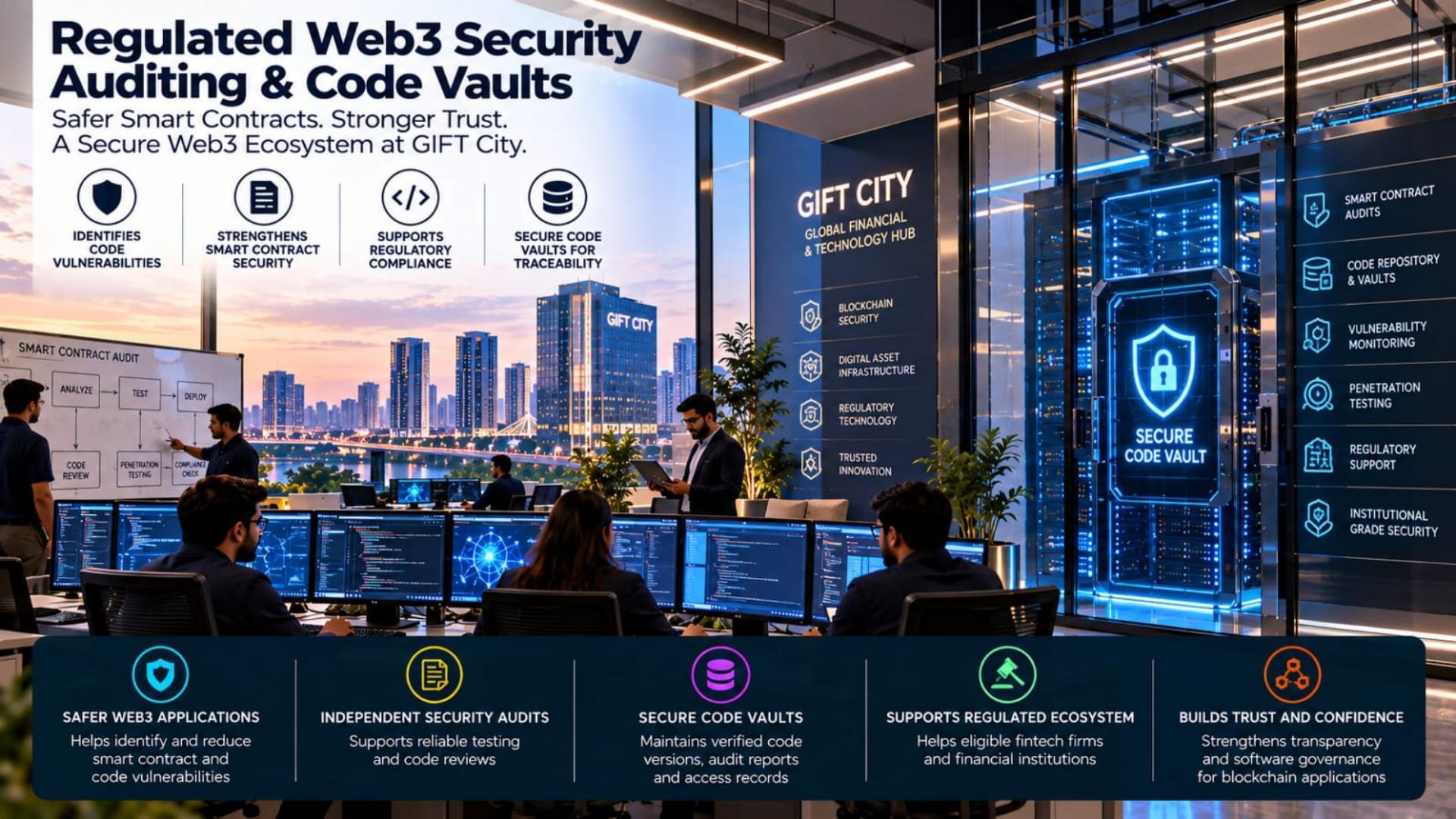
As GIFT City expands its international financial services and technology ecosystem, blockchain security could become a specialised area of digital infrastructure development. Regulated Web3 security auditing and code vaults represent a concept focused on improving the reliability, transparency and protection of blockchain-based applications used in financial services and digital transactions. Web3 applications can include smart contracts, tokenisation platforms, digital asset systems and decentralised applications. Smart contracts automatically execute predefined instructions when specified conditions are met. However, coding errors, weak access controls and design flaws can expose these applications to financial losses or unauthorised activity. Independent security audits help identify vulnerabilities before and after a system goes live. A specialised facility could bring together blockchain developers, cybersecurity auditors, compliance professionals and digital asset technology companies. Services might include smart-contract testing, source-code reviews, penetration testing, vulnerability monitoring and secure code repositories. A code vault could preserve verified software versions, audit reports, access records and recovery documentation, helping organisations maintain traceability and strengthen software governance. For GIFT City, such infrastructure could potentially support eligible fintech firms and financial institutions exploring blockchain-based settlement, tokenisation and other regulated digital financial services. However, the legal status of individual activities varies, and businesses must comply with applicable Indian laws, IFSC regulations and relevant cybersecurity requirements. Commercial demand would depend on institutional adoption, the availability of skilled auditors and confidence in the quality of independent security assessments. Blockchain security services could add a specialised technology layer to GIFT City's financial ecosystem. The strongest opportunity lies in combining rigorous smart-contract audits, secure code management and regulatory awareness to help institutions assess blockchain applications before adopting them at scale.
21 Oct 2026
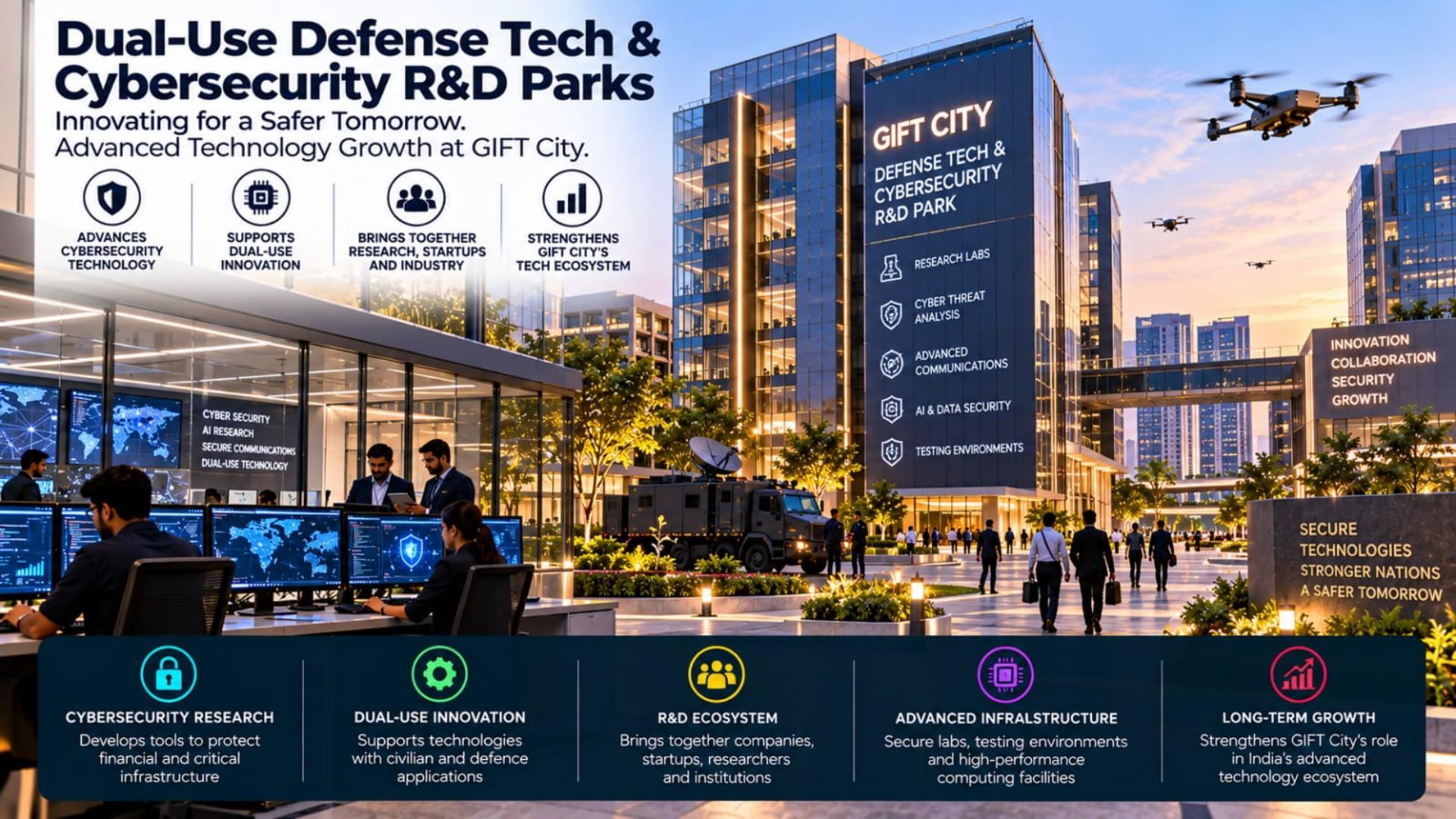
As GIFT City develops its international financial and technology ecosystem, advanced cybersecurity and strategic technology research could become specialised areas of future commercial growth. Dual-use defense technology refers to technologies that can serve both civilian and defence-related purposes. Cybersecurity software, secure communications, artificial intelligence and advanced data protection tools are examples of technologies that may have applications across multiple sectors. A dedicated research and development park could bring together technology companies, cybersecurity specialists, research teams, startups and eligible institutional partners. Potential facilities may include secure laboratories, software testing environments, cyber threat research centres, encrypted communications systems and controlled-access computing infrastructure. These facilities could support the development and evaluation of technologies designed to protect financial networks, industrial systems and critical digital infrastructure. GIFT City's financial services ecosystem could provide a relevant environment for civilian cybersecurity innovation, particularly in areas such as fraud detection, identity protection, secure cloud infrastructure and financial data security. Collaboration with universities and technology institutions could also support specialised training and research. Defence-related projects, however, would require appropriate authorisations, security arrangements and compliance with applicable government regulations. For real estate, such developments could generate demand for specialised research buildings, secure office space, laboratories and resilient digital infrastructure. Their commercial viability would depend on the presence of qualified companies, research funding, skilled talent and long-term institutional partnerships. A specialised technology park would need a clear operating model rather than relying solely on the promise of future defence-related investment. Dual-use technology research could broaden GIFT City's role in India's advanced technology ecosystem. The most practical starting point would be civilian cybersecurity and secure financial technology, with any defence-related activities developed only through eligible partnerships and the required regulatory approvals.
20 Oct 2026
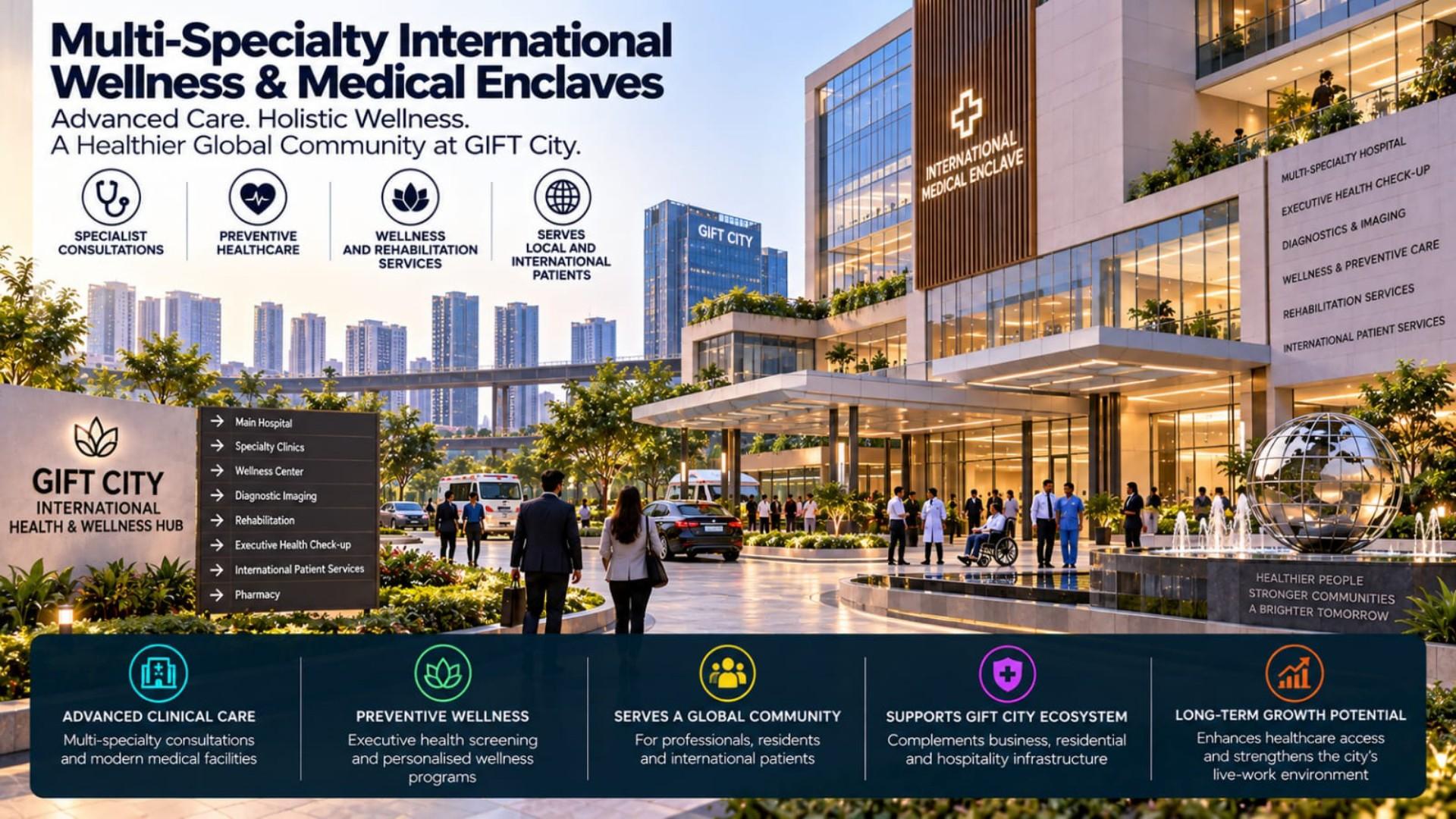
As GIFT City expands its international financial and business ecosystem, specialised healthcare and wellness infrastructure could become an important part of its long-term urban development. Multi-specialty international wellness and medical enclaves represent a concept combining advanced clinical services, preventive healthcare and personalised wellness facilities within a professionally managed environment. Such developments could include specialist consultation centres, diagnostic laboratories, executive health-screening facilities, rehabilitation units and preventive wellness clinics. Depending on demand and regulatory approvals, selected facilities could also offer services for international patients seeking specialist consultations, planned treatments or follow-up care. Integrating digital health systems and coordinated appointment services could make healthcare access more convenient for professionals with demanding schedules. For GIFT City, this concept could serve financial-sector employees, international executives, visiting professionals and residents of the wider Ahmedabad–Gandhinagar region. Medical facilities may also create demand for supporting real estate, including specialist clinics, healthcare administration offices, short-stay accommodation for patients and families, and pharmacy or diagnostic services. However, establishing an international-standard medical enclave requires substantial capital investment, qualified healthcare professionals, appropriate clinical infrastructure and compliance with applicable healthcare regulations. International patient demand would depend on treatment quality, affordability, specialist availability and access to suitable transport connections. Wellness services must also maintain clear distinctions between evidence-based healthcare and treatments without established clinical support. Specialised healthcare could diversify GIFT City's development beyond offices, finance and residential property. The strongest opportunity would lie in creating a clinically credible healthcare ecosystem that serves local demand first while building the capabilities needed to attract international patients over time.
20 Oct 2026
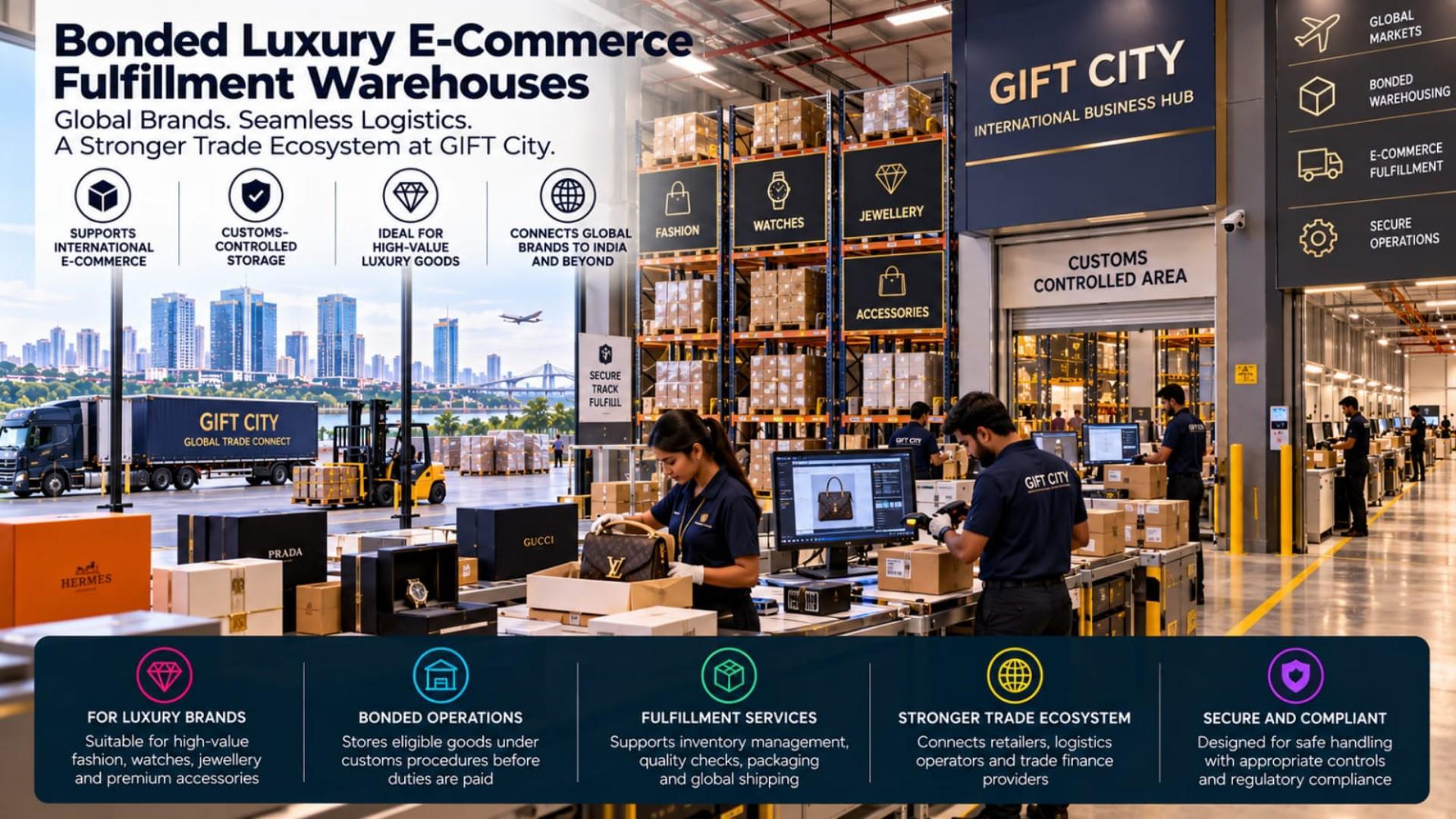
As GIFT City strengthens its international business ecosystem, specialised e-commerce logistics could create opportunities for businesses managing high-value goods across international markets. Bonded luxury e-commerce fulfillment warehouses represent a niche infrastructure concept designed to store, process and coordinate eligible imported or export-bound products under applicable customs procedures. Unlike conventional warehouses, bonded facilities operate within a customs-controlled framework. Subject to the relevant approvals, eligible goods can be stored before applicable import duties are paid, with payment generally arising when goods are cleared for domestic consumption. Re-exports may receive different customs treatment depending on the applicable rules. Bonded status does not automatically exempt products from taxes, import restrictions or other regulatory requirements. These warehouses could serve international retailers and distributors handling premium fashion, watches, jewellery, luxury accessories and other high-value merchandise. Facilities may include secure storage areas, inventory management software, product authentication processes, quality checks, packaging stations and systems for tracking orders across borders. Temperature control and specialised handling may be required for certain product categories. For GIFT City, this concept could connect international merchants with logistics operators, trade finance providers and digital commerce platforms. Gujarat's wider transport and industrial network may offer supporting advantages, but the suitability of a particular location would depend on connectivity, customs permissions and access to the required distribution channels. Commercial viability would also depend on order volumes, warehouse costs, delivery timelines and demand from participating retailers. Bonded e-commerce fulfillment could add a specialised logistics layer to GIFT City's international trade ecosystem. The strongest opportunity would be to combine secure inventory management, efficient customs processes and reliable cross-border delivery while ensuring every operation complies with applicable regulations.
Showing 12 of 312 insights